TUPAREV TECHNOLOGIES

ABOUT

  1. Company

    Founded in the early 1999 by Georg Tuparev as a Dutch training and consulting company, Tuparev Technologies is now delivering specialised financial and business services, and software for research and environmental projects. Our main advantage is the ability to employ specialised knowledge and experience in various fields (as diverse as computer science, astrophysics, medicine, molecular biology, etc). We adopt and use different modern technologies. This allows us to implement and deploy complete solutions for complex problems.

    Get in touch
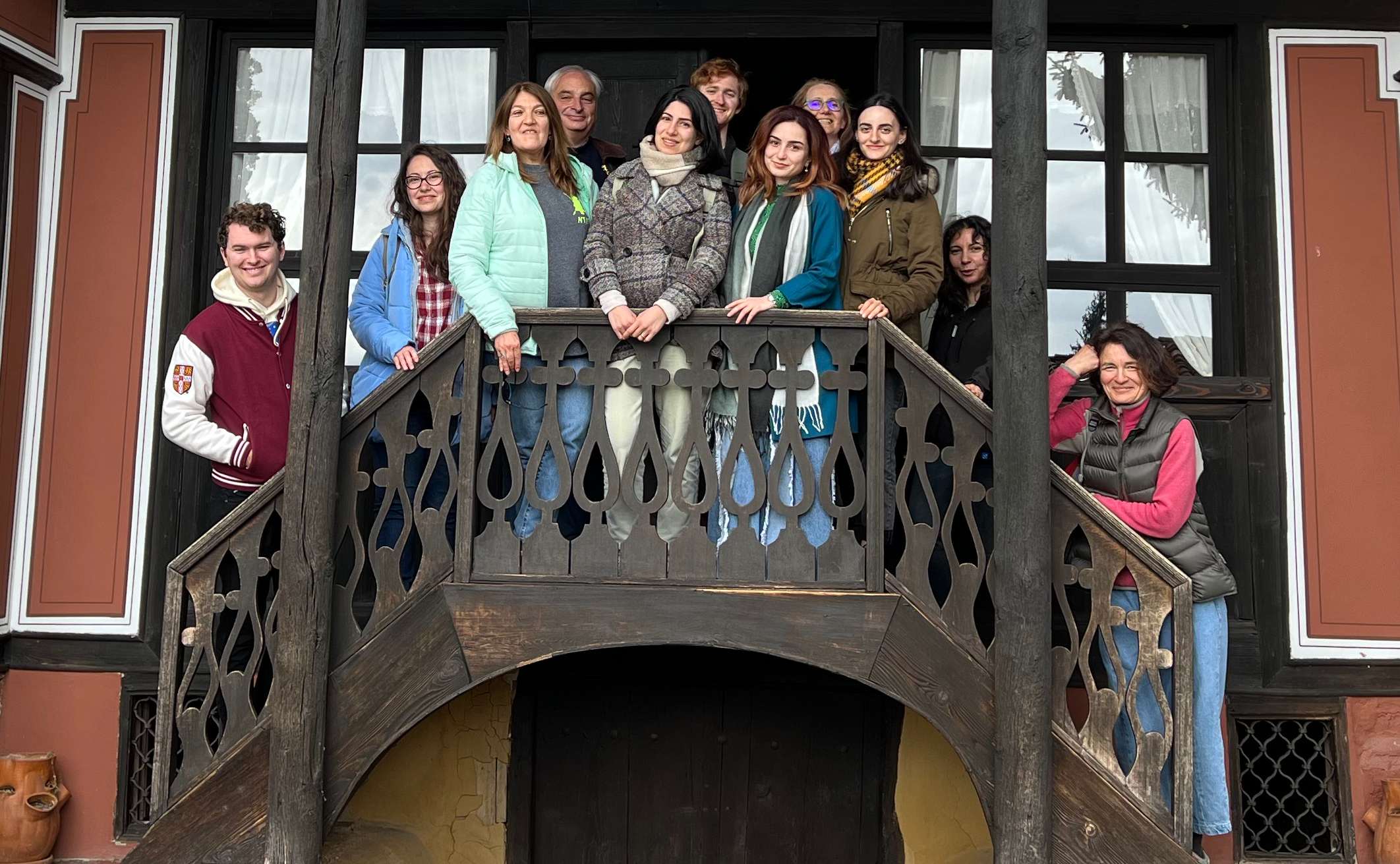
    Tuparev Technologies team in Koprivshtiza, Bulgaria, april 2022
    Tuparev Technologies team in 2022. Bulgaria, Armenia, UK, USA.
  2. Job Openings

    Our software development team with headquarters in Sofia, Bulgaria and with colleagues in several European countries (The Netherlands, France, Germany) and the US is soon planning to open new offices in both Germany and Armenia.

    We have a number of new projects that are planned or in early stage development and are constantly looking for new colleagues that have experience with Apple platforms (iOS, macOS, tvOS, watchOS) or with development in general. We also welcome people with knowledge in wide range of fields, from computer science and finances all the way through to astrophysics and robotics. If you are enthusiastic to tackle new challenges and are open to new crazy-sounding ideas, you’ll probably fit into our diverse team perfectly!

    We are an equal opportunity employer, and we mean it. If you join our team, accommodations will be made to enable individuals with disabilities to perform their profession. Parents and others who might need flexible working hours will also be accommodated as much as possible. We also have a Gender Equality Plan

    Please do not send us a standard CV! Tell us about who you are, what you like and dislike, your experiences and your expertise. Do you have an app on the AppStore? Open source projects on GitHub? Why do you like what you do? What are your dreams? What would you like to achieve professionally?

    Note: Developers (and their families) trying to escape the war in Ukraine or trying to escape from the repressive Putin regime in Russia are welcome to contact us. We will try to find suitable accommodation for them and their loved ones.

    Our job openings are often not for specific positions but are rather more general. If you think you could be a match for our team (or have any questions for us!) then you are welcome to send us an email at hr@tuparev.com.

  3. Why Tuparev?

    Your work needs to move forward. Your software should take you there.

    We work from projects at their outset all the way to those which carry years of code, data and decision-making.

    Our proven tools and in-house technologies support demanding systems, with our systems processing millions of transactions each minute or managing archives measured in exabytes. These foundations therefore let our engineers and designers concentrate on what is particular to your work.

    Server-side Foundations Data-intensive Systems High-troughput Transaction Systems Powerful Web Platforms Native App Clients Legacy Codebases Systems Modernisation Application Care Accessibility & Usability Space & Science Software

    The expertise your system needs, at every stage

    The essence of our approach is the understanding that software is rarely just a product once customers depend on it. Software is a working environment influenced by decisions and the people who have worked on it and develops an accumulation of technical history.

    For over two decades, we have helped startups, governments, enterprises, universities, space actors, publishing houses, and organisations from MedTech to FinTech move complex work forward through software.

    Our senior engineers and designers apply this experience and broad technical knowledge to your project. They create clear, intuitive interfaces without reducing the capabilities that expert users need.

    Great software starts with understanding your work

    We understand the demands of various sectors of industry such as finance, education, medicine, science and space. This knowledge helps us build software around the processes, data and decisions that shape your work.

    Our engineers work directly with your specialists. We bring experience and knowledge of your field, then learn the processes, constraints and exceptions specific to your organisation. This lets us test the brief before we write code. We find what it has missed and choose a sound data model, workflow and interface for your project.

    What this means for our clients

    In fields we know, we bring that knowledge from the start. This means less time explaining the basics, better questions early on and a design grounded in the work it must support. We also have a proven way to enter new fields: we learn the processes with your specialists before we design the system. You can bring us one technical problem, an existing system that needs work or a new system to build.

    Selected case studies

    • Finance: banking, B2B and B2C systems for payments, identity checks and compliance
    • Education and publishing: course search, enrolment and payment; legal training databases; mathematical authoring tools
    • Medicine and sciences: medical-imaging workflows and research software
    • Astronomy and space: telescope control, adaptive scheduling, imaging pipelines and orbital intelligence

    Explore our fields of work

    Data that fits the work

    Whatever its source or form, we transform data into the outputs and insight your work requires—and engineer the pipelines, interfaces and applications that put it to use.

    We can begin with data in its current form—whether it is held in a modern database or legacy system, received through an API or live feed, or stored in structured and unstructured files.

    We assess its format, structure, quality, volume, history, update rate and access requirements. We then build the conversion, validation, storage and interfaces required for its intended use.

    What this means for our clients

    You can bring us one dataset, data spread across several systems or the requirements for a new data architecture. Existing sources can remain in place where necessary. We can add conversion, validation, storage or access in stages, without requiring an all-at-once migration.

    The architecture is determined by what the data must do: support live transactions and batch processing, provide searchable histories and analysis-ready datasets, run scientific workflows or remain verifiable over decades. We can apply this approach to a small collection or design an archive intended to scale to multiple exabytes.

    Selected case studies

    • High-throughput transactions: gateways that expose checks and services from banks, public bodies and other providers through one consistent API, supporting live REST requests alongside XML and CSV batches
    • Long-term archives: Long-term archives: Our ExaFile technology preserves contextual metadata and immutable versions, verifies data through chunk-level checksums and background integrity checks, and repairs damaged copies across sites

    Explore our fields of work

    Every layer, working as one

    We build native and web clients, middleware, servers and data archives. We can deliver the whole system or integrate one layer into your existing stack. We make each part work with the rest at the scale, speed and reliability you need.

    We define how clients, services, databases and archives exchange data, control access, handle errors and recover from failure. We test complete tasks—from an action in the interface, through the server and storage, to the result the user receives.

    Where parts already exist, we keep what works and connect the new work to it. We examine both sides of every interface. This lets us find whether a slow or failed request begins in the client, the service, the database or the connection between them.

    What this means for our clients

    You can ask us to build one application or service, solve a difficult integration or take responsibility for the complete system. Existing software does not have to be replaced simply because another part must change.

    When something fails, your team does not have to determine whether the interface, server, database or integration is at fault and then coordinate separate teams to fix it. We trace the problem to its source, correct it and test the effect of the change across the system.

    Selected case studies

    • Complete operational system: A robotic telescope network brings observation requests, access rights and time allocation together with adaptive scheduling, telescope control, a web portal and a searchable archive
    • Focused integration: For a robotic-tape-system supplier, we developed the Mac client NASA needed to use the system in its Mars rover missions
    • Connected business process: Printing house portal linked customer details and uploaded files with ordering, production and delivery, while retaining the information needed for later orders

    Explore our fields of work

    From problem to working system

    We take each project from definition and prototyping through development and deployment. Our agile approach gives you working software early. We test and refine it with you as your needs become clearer or change.

    We begin by defining who will use the system, what work and which processes it must support and what the first useful release must achieve. We then separate what is unique to the project from technology we have already developed and applied.

    Our technology base includes tools, systems and reusable modules for data conversion and validation, high-throughput transactions, long-term archives and scientific workflows. Where they fit, we adapt the relevant data models, interfaces, access controls and processing steps to the client’s work. This saves the time and cost of rebuilding proven foundations without forcing the project into a standard product.

    We prototype what is new or uncertain. Each stage delivers working software that users can test with real data. The results shape the next stage: we can correct assumptions, change priorities and extend the scope before with speed and before mistakes become costly.

    What this means for our clients

    You do not have to fund the repeated development of technical foundations that we already possess. Reusing and adapting established modules shortens the route to the first working release, lowers development costs and reduces the uncertainty attached to newly written infrastructure.

    More recourses can therefore be spent on the work that distinguishes your system: its business rules, data, integrations, workflows and user experience. Early releases show whether these choices work in practice while they are still less expensive to change.

    Selected case studies

    • From website to enrolment portal: our work for a German state education ministry began with the design of a public course website. It developed into a portal built around the existing course database, through which users could search, enrol and pay

    Explore our fields of work

    Modernise the system and build on its value

    We preserve the business logic, data and integrations built over years of use. We replace what limits the system and add what it needs to remain useful.

    Before changing a long-lived system, we examine its data model, business logic, dependencies, interfaces, and build and release process. We also record the behaviour on which users and connected systems rely, including important exceptions that may never have been documented.

    We then separate the sound parts from those that limit the system. Depending on the need, we can refactor difficult code, replace one client or platform, automate a migration or add new ways to use an established database. The work can proceed in controlled stages while the system remains in use.

    What this means for our clients

    Modernisation does not have to begin with a full rewrite. Working data models, proven behaviour and dependable integrations can remain. The budget can then be directed towards the parts that create risk, limit performance, obstruct new work or prevent valuable data from being used.

    A staged approach reduces migration risk and avoids making the organisation wait for one large replacement. Each change can deliver a useful result and be tested in practice before the next begins.

    Selected case studies

    • Established database opened to new use: We added an OLAP model and client-native tools to a chemical industry client’s established database, allowing staff to explore decades of product and sales records without replacing the system that held them.

    Explore our fields of work

    Care for your App

    We maintain, update and improve your application after release. We keep it secure, accessible and compatible as platforms and user needs change.

    We begin by reviewing the app’s source code, dependencies, crash reports, performance, accessibility, build process and App Store setup. This shows what needs immediate attention and what should become part of its continuing care.

    We then handle bug fixes, crash monitoring, performance improvements, operating-system and server API updates, refactoring, interface changes, small new features, localisation, accessibility and App Store releases.

    What this means for our clients

    You can bring us an app for a single update or ask us to care for it over time. We begin by reviewing the codebase and agreeing what the app needs. The scope reflects its condition and complexity, your release plans and the role it plays in your business.

    Regular AppCare protects the time and money already invested in the app. We schedule operating-system and API updates, correct faults and prepare releases before neglected work becomes an urgent problem. Because we retain our knowledge of the codebase, later updates do not begin with another handover and technical investigation.

    You also gain the skills the app requires without having to keep them all in-house. Your team remains free to develop new products and focus on its main work, while we keep the app compatible, reliable and useful.

    Selected case studies

    • Keep the app reliable: fix bugs, monitor crashes and improve performance
    • Keep pace with change: adapt the app to new operating-system versions and changes to server APIs
    • Improve the app over time: refactor code, revise interfaces and add focused new features
    • Serve more users: improve accessibility and localise the app for other languages and markets
    • Manage releases: maintain the source-code repository and prepare, submit and release updates through the App Store

    Explore our fields of work

    New tools with experienced judgement

    We test new AI development tools and put the useful advances to work. They speed up tasks that can be clearly defined and checked. Our engineers take the decisions in defining system constraints, architect and supply domain knowledge and experience.

    AI development tools can become useful however, only once engineers have made the software intelligible. Clear structures, names, variables, properties and comments give a model the context it needs. It can then trace code, draft documentation and prepare unit tests. This cuts routine effort without generated output defining the system and its architecture.

    Production software faces demands that a small test cannot reveal. A design that works with sample data may fail under full load, weaken security or become costly to change. Decisions about data structures, storage, interfaces, throughput, integrity and recovery therefore rest with engineers who understand the trade-offs and have dealt with their consequences.

    Technical context alone is not enough. The client’s rules, exceptions, users and existing systems must be learned from the people who know them. Our engineers work directly with those specialists, carrying that knowledge from the first discussion into the design, code and tests.

    AI works within this process. We define the task, supply the context, review the output and test it against the intended behaviour. Its use depends on the risks involved and the client’s security and confidentiality requirements.

    What this means for our clients

    Documentation, test preparation and code investigation take less time. More of your recourses go to architecture, integrations and domain rules that make your system valuable.

    You gain the speed of current tools without inheriting software built on choices no one can explain. The system remains understood, testable and fit to maintain as your needs change.

  4. Latest News

    31.05.2022

    Company retreat 2022

    Here at Tuparev Technologies, we think that a healthy and positive working environment is vital to building a successful company as well as for development on a more personal level. A key ingredient to this is the social side of work. As we have so many members of our team working in all parts of the globe, we mostly get to contact each other in virtual. It is however a good idea to be able to meet in person from time to time. This led to our company retreat this April, where we had colleagues come from the US, Germany, Armenia and the Netherlands to get together with our main group in Bulgaria.

    The first part of our retreat was held at Koprivshtitsa, a small town deep in the Bulgarian countryside. An idyllic little village hidden in the hills of central Bulgaria, it is not only well known for its many picturesque 19th century merchant's residences ordained with intricate decorations in old Turkish and Bulgarian revival styles but also for the historical significance of this location, where in 1876 an uprising against the Ottoman empire had started.

    As well as visiting these houses, the team also visited the valley of the Thracian Kings a short drive away, where they had the chance to look at ancient Thracian gold artefacts and explore many of the rock formations scattered around the valley which are suspected to contain ancient carvings in various stones. Naturally much of this time was also spent around a table, eating, drinking and chatting while getting to know each other and the new members of our team.

    After the weekend away in Koprivshtitsa, some of the team went to the Rozhen national observatory in the Rhodope Mountains. Here they had tours of some of the current facilities used by the Academy of sciences, as well as an update on the new 1.5 m telescope currently being built with the assistance of our company. This visit was followed by a few days of brainstorming at our main company headquarters in Sofia.

    The company retreat can be most certainly be regarded a success and was a nice change from all the COVID restricted Slack and Skype calls off the last two years. The results of our retreat will hopefully soon be apparent in the coming months!

    Below are a few pictures of our trip and of our members enjoying themselves!